
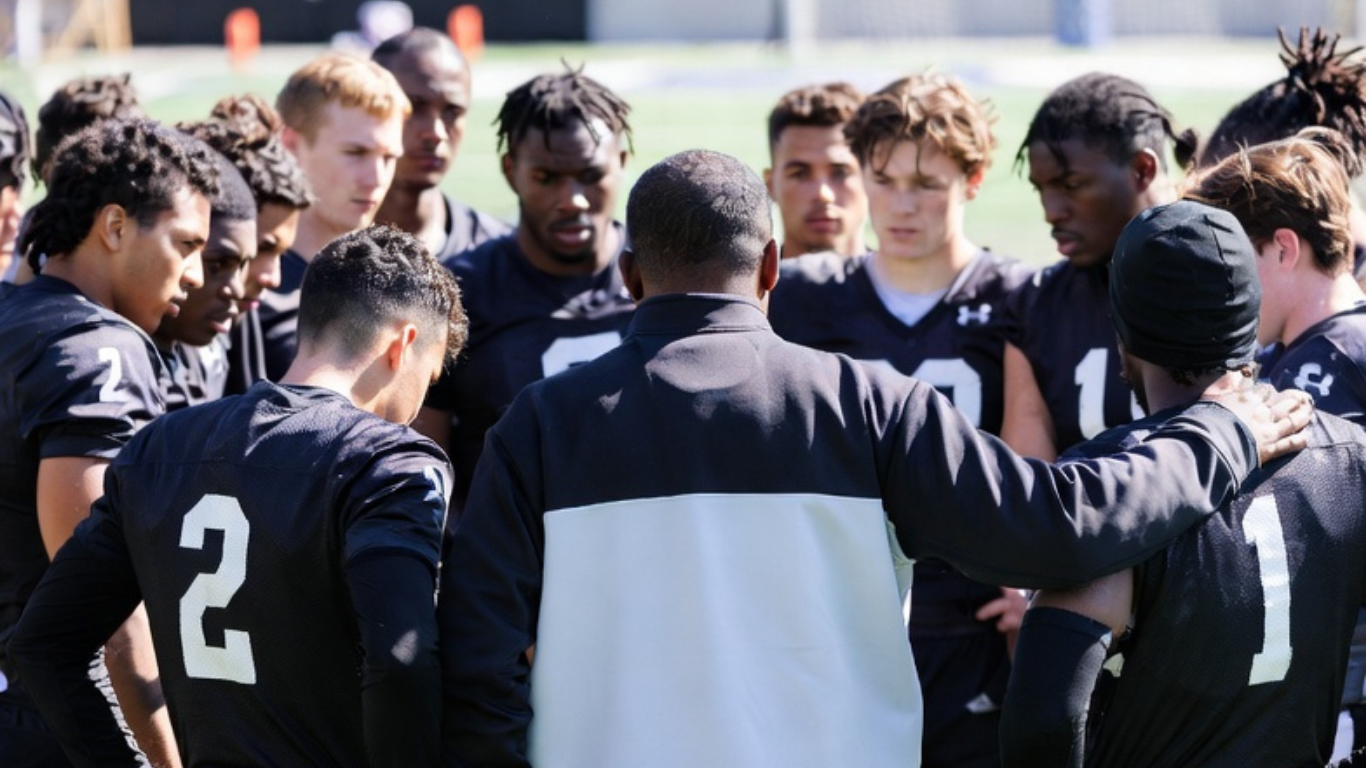
Coaches don’t win games with sleep. They win with what sleep fixes.
Better recovery. Better decisions. Greater availability late in the season.
That’s why the best programs treat sleep as a daily cultural signal. It’s a window into how their team operates under pressure, away from the facility, when no one is watching.
Coaches Don’t Want Sleep Lectures. They Want Fewer Problems.
Let’s be clear up front. Coaches don’t want:
- Sleep lectures
- Another dashboard
- Academic correlations that live in a PDF and die mid-season
What coaches do want is simple:
- Fewer bad decisions Thursday nights, Friday Night Lights, and Saturdays
- Healthier players in October and November
- More consistency on game day
Sleep matters because it quietly determines all three (decisions, health, and consistency), through a culture built over time.
Sleep Is a Cultural Signal. Not a Recovery Hack
In winning programs, sleep is treated as a signal of athletes' maturation and their buy-in to the team's expectations. It’s a signal of:
- How athletes make decisions under stress
- How consistently they recover between sessions
- How the program functions away from the facility
Culture shows up in what athletes do when no one is watching. Sleep exposes that truth faster than almost anything else. That’s why the best programs don’t coach sleep as a moment.
They coach it as a process.
What Modern Sleep Science Reveals About Availability and Performance
The latest sleep and sport science, built on decades of research and refined through modern athlete monitoring, points to a few consistent truths that matter directly to availability, health, and performance in student-athletes.
1. Student-athletes need more sleep than they think
Sleep researchers keep finding the same thing: most student-athletes need 8–9+ hours of sleep for optimal cognitive function, learning, emotional regulation, and physical recovery.
For student-athletes, the demand is often higher due to:
- Training load
- Academic stress
- Early schedules
- Emotional and social pressure
Sleep loss degrades decision-making, impulse control, and emotional regulation, the exact skills required late in the week and under competitive pressure.
2. Sleep loss shows up as decision problems before it shows up as injuries
Research in adolescent and collegiate athletes has linked insufficient sleep to:
- Slower reaction times
- Poorer mood regulation
- Increased risk-taking behavior
- Reduced learning and memory consolidation
In practice, coaches see this as:
- Missed assignments
- Emotional overreactions
- Late-week mental mistakes
- Poor choices away from the facility
Teams rarely lose because athletes are “tired.” They lose because tired athletes make worse decisions.
3. Chronic short sleep increases injury risk and reduces availability
One of the most consistent findings in youth sport medicine is that athletes who routinely sleep less than recommended levels are at greater risk of injury and prolonged recovery. Habits stack over weeks, not just one bad night. For coaches, that makes sleep a controllable risk factor. Unlike contact, luck, or genetics.
Availability is the best ability. (We all know that one.) Sleep helps protect it.
4. Consistency matters more than perfection
Sport sleep experts agree on this point: Volatility hurts teams more than the occasional bad night.
Irregular sleep schedules disrupt:
- Hormonal recovery
- Circadian rhythm alignment
- Cognitive readiness
Consistent sleep, even if not perfect, supports faster recovery and more stable readiness. This is why a strong sleep culture doesn’t eliminate bad nights. It shortens recovery time after them.
Coach Translation: What This Means in Real Life
The takeaway from modern sleep science isn’t to demand perfect sleep. It’s to coach patterns early enough that problems don’t compound.
- Look for trends, not nights
One bad night is normal. Volatility over time is actionable. Patterns reveal risk long before performance drops. - Surface issues earlier in the week
Sleep patterns often expose academic stress, overload, travel fatigue, or off-field issues before they show up in practice or competition. - Protect honesty to preserve the signal
Athletes tell the truth when sleep data leads to conversations, not consequences. When honesty disappears, so does your early warning system. - Coach habits, not compliance
Awareness and feedback change behavior more effectively than rules or mandates.
So if the science is clear, and we've got practical ways to use it, why do so many well-intentioned programs still miss the mark?
Why Winning Programs Coach Patterns, Not Bedtimes
Here’s where many well-intentioned programs miss the mark. They treat sleep as a behavior to enforce. Winning programs treat sleep as a pattern to understand.
They ask better questions:
- Are our athletes becoming more consistent over time?
- Do poor weeks stack, or do we rebound quickly?
- Are red flags increasing or decreasing late in the season?
These are cultural questions. And culture lives in patterns, not moments.
Why Sleep Culture Shows Up Late in the Season
Every team looks similar in August. Separation happens in October and November.
This is where sleep culture reveals itself:
- Injury risk compounds
- Academic pressure peaks
- Emotional fatigue sets in
- Travel and stress increase
Programs with strong sleep culture don’t eliminate these stressors. They absorb them better.
Their athletes:
- Recover faster after poor nights
- Maintain readiness more consistently
- Make fewer preventable mistakes
- Stay available longer
That’s not luck. That’s culture.
Why Awareness Beats Enforcement
Behavioral science and real-world coaching experience agree on this: People change faster when they understand patterns than when they are punished for outcomes.
When athletes are given:
- Daily awareness
- Non-judgmental feedback
- A clear connection between habits and readiness
They begin to self-correct. This is why programs that consistently track and discuss sleep often see improvement, even without mandates.
Awareness creates ownership. Ownership changes behavior.
The Real Competitive Advantage (the Margins)
Sleep quietly supports everything that wins games:
- Decision quality
- Emotional control
- Learning and execution
- Recovery speed
- Availability
If even 60% of your athletes sleep a little better and more consistently, the result isn’t a new team. It’s fewer mistakes. Better decisions. More stability in the margins.
We tell XA Athletes all the time that the best on the planet at what they do are intentional about their sleep and recovery. We see this in our teams as well. Winning teams sleep intentionally.
Final Thought for Coaches
As you think about sleep in your program, don’t ask: “How do I get my athletes to sleep more?”
Ask: “What is our sleep data telling us about how we operate under pressure?”
That answer is rarely about bedtime. It’s about culture. And culture is what shows up on game day.
At XA Score, we believe sleep is a daily cultural signal and a lot more than just a recovery metric. When coaches protect honesty and focus on patterns, sleep becomes a powerful tool for readiness, health, and sustainable winning.
What’s a Rich Text element?
The rich text element allows you to create and format headings, paragraphs, blockquotes, images, and video all in one place instead of having to add and format them individually. Just double-click and easily create content.
- ffghfgh
- sfghsfghs
- fghh
- sdfhsfghsdfghsgf
- sghsfgh
- sfghsfgh
- sgfh
Static and dynamic content editing
A rich text element can be used with static or dynamic content. For static content, just drop it into any page and begin editing. For dynamic content, add a rich text field to any collection and then connect a rich text element to that field in the settings panel. Voila!
How to customize formatting for each rich text
Headings, paragraphs, blockquotes, figures, images, and figure captions can all be styled after a class is added to the rich text element using the "When inside of" nested selector system.

